Carmanah
CARMANAH
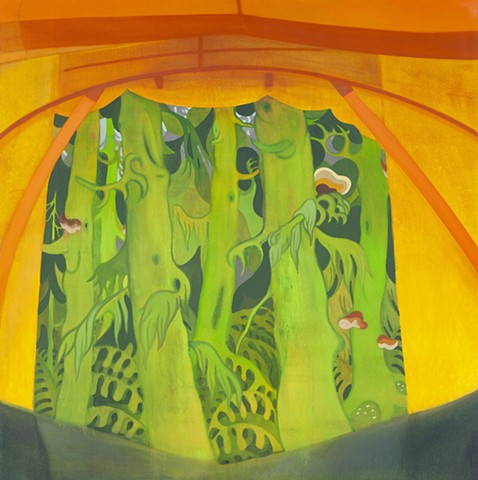
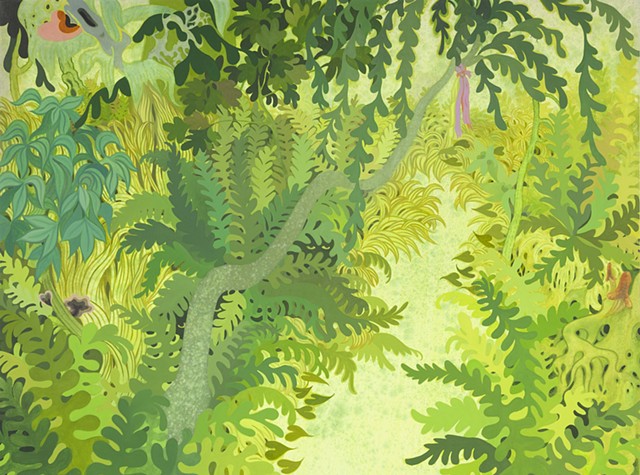
Carmanah is an old growth rain forest located on the west coast of Vancouver Island, in Ditidaht ancestral territory, and is loosely translated to English as ‘thus far up river’. As an ancient forest it is the home to red cedars well over a thousand years old, as well as Canada’s tallest tree at 314 feet. It is a unique coastal biome that was protected as a park in the early nineties, and has experienced neglect since that time due to repeated cuts to funding to maintain it and protect it from tree poachers and illegal logging. In travelling to this wilderness, one has to drive through several hundred kilometers of clear-cuts razing entire mountainsides, some of which go right up to the borders of the park.
Turning a small part of this biome into a park where people have access to wilderness, in a way that is managed to protect it from further damage is an invaluable experience as it is enduring. It gives us the opportunity to develop an individual relationship to wilderness that connects us to the landscape in a way that a collective relationship to the natural world does not. The former is about situating ourselves within the world in a way that comprises the vast majority of how we have historically formed relationships to the landscape, and the latter could be seen to be dominated by urban spread, industry and the resource extraction economy that Canada was founded on. One kind of relationship could and should inform the other. Empathy for the landscape can help us make informed decisions regarding the sustainable development of our natural resources well into the future, but we have seen how mismanagement and a focus on short-term gains around the world can lead to the collapse and destruction of the environment, ultimately contributing to climate change and a new age of the Anthropocene.
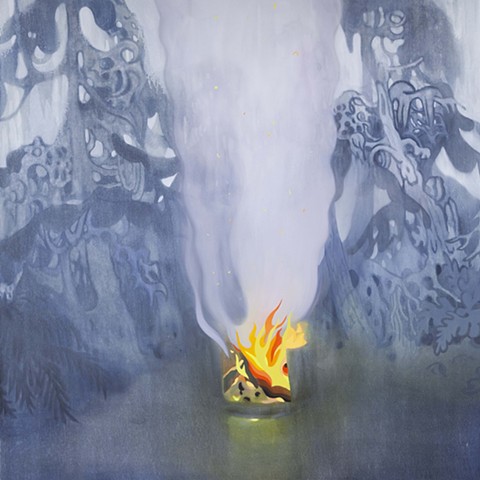
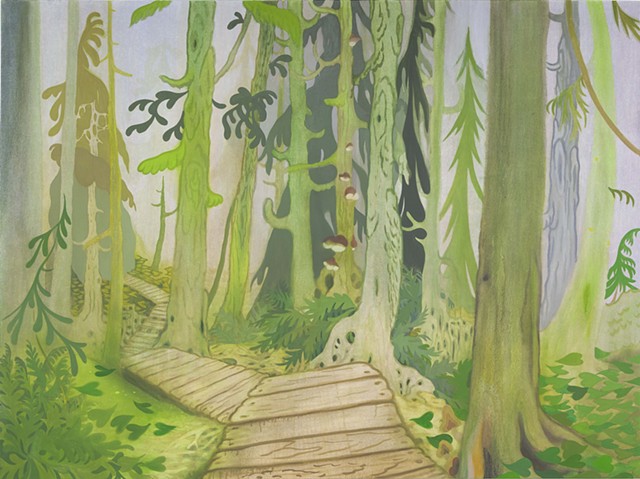
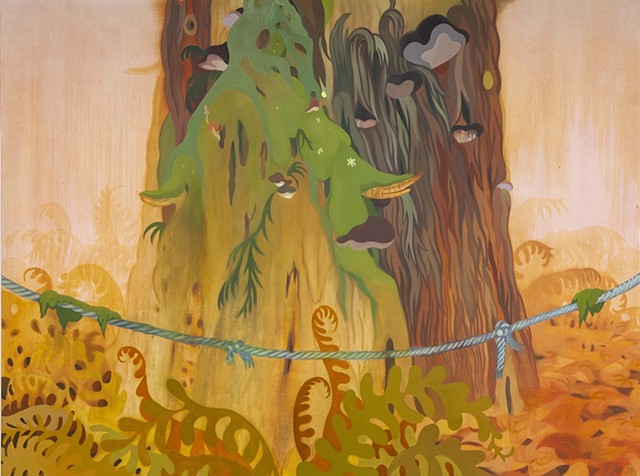
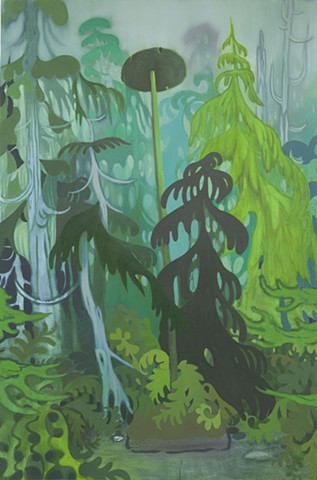
This body of work is an attempt to recreate the experience of this place for those that don’t have access to it, to foment a relationship to it and create a kind of empathy for not just this space but all those ancient and vulnerable wildernesses that are at risk of disappearing. Each of the landscapes contain within them some aspect of human intervention, at times inviting and at times blocking a way into the landscapes that they describe, creating a tenuous and liminal experience of a forest on the verge of vanishing.